

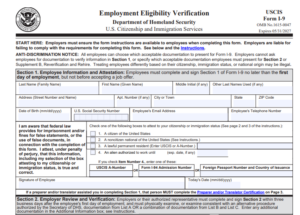
 What is Form I-9—and why does it matter? Form I-9, Employment Eligibility Verification, is the federal form used by U.S. employers to verify the identity and employment authorization of every person hired to work in the United States. The employee completes Section 1, and the employer reviews acceptable documents and completes Section 2. Properly completing and retaining the form demonstrates compliance with federal verification requirements, promotes a consistent and lawful hiring process, and helps reduce exposure to costly audit penalties.
Form I-9 violations can lead to civil fines, government audits, back-pay or hiring orders in discrimination cases, debarment from federal contracts, and—for a pattern or practice of violations—criminal penalties. Because many fines are assessed for each deficient form or affected worker, seemingly small errors can quickly create significant financial exposure.
The best defense is a repeatable process: use the current form, complete each section on time, let employees choose from the Lists of Acceptable Documents, track reverification dates, retain forms for the required period, train reviewers, and conduct periodic internal audits. Correct errors transparently—never backdate or conceal a correction.
The takeaway: I-9 compliance is not a box-checking exercise. One missing form may constitute a violation, and dozens of flawed forms can multiply an employer’s exposure. Review the current guidance at USCIS I-9 Central and the federal penalty schedule, then build I-9 compliance into every onboarding workflow.
Penalty amounts and requirements can change and may depend on the violation date and case facts. This post is for general informational purposes and is not legal advice; consult current agency guidance and qualified counsel for situation-specific questions.